

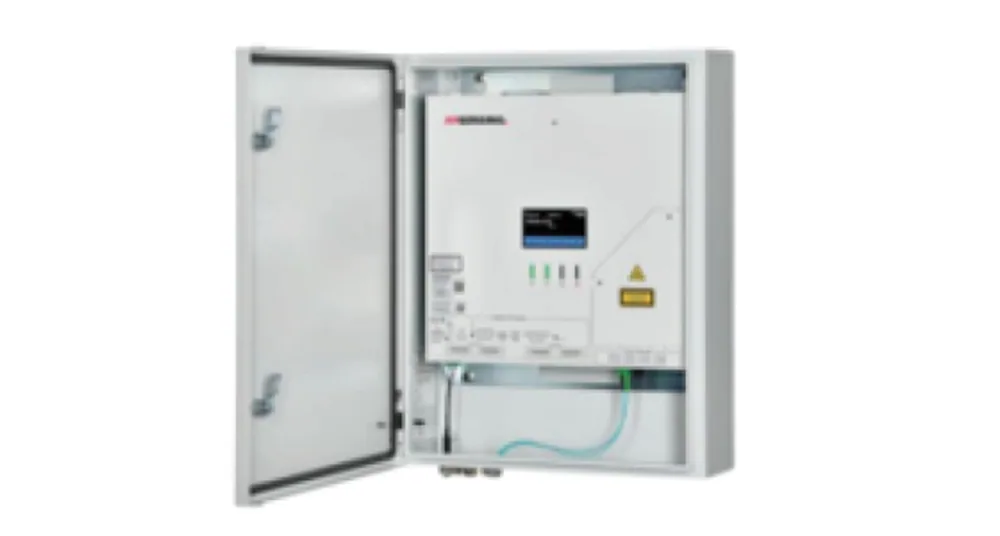

Distributed Temperature Sensing (DTS)
- Southwire #
- HVUD35
Distributed Temperature Sensing (DTS) systems use fiber-optic technology to provide continuous, real-time temperature monitoring along the entire length of high-voltage cable networks. By measuring temperature at every point of the cable, DTS provides complete thermal visibility, enabling early detection of hot spots, improved asset management, dynamic cable rating, and enhanced system reliability without requiring distributed power sources or conventional point sensors.
Priced by quote — copper moves daily (COMEX), so we quote at the current price.
Available sizes & constructions
| Size (AWG or kcmil)(mm2) | |
|---|---|
| null nullnull null |
Application & features
- Designed for real-time thermal monitoring of high-voltage cable networks
- Provides continuous temperature measurement along the entire cable length
- Detects hot spots and abnormal thermal events in real time
- Delivers complete thermal visibility rather than monitoring at discrete points
- Supports dynamic cable rating and increased asset utilization
- Enables operators to optimize cable loading while maintaining safe operating limits
- Improves system reliability through early identification of potential issues
- Enhances asset protection and operational decision-making
- Reduces maintenance costs and unplanned outages
- Provides actionable thermal data for condition monitoring programs
- Operates without field power along the sensing path
- Immune to electromagnetic interference common in high-voltage environments
- Suitable for utility, transmission, and critical infrastructure applications
- Supports long-term monitoring and performance optimization of cable systems
Standards & references
- Fiber-optic based temperature monitoring technology
- Continuous temperature measurement across the full cable length
- Real-time thermal monitoring for high-voltage cable systems
- Distributed sensing technology eliminates reliance on discrete sensors
- Supports dynamic cable rating (DCR) applications
- Suitable for utility, transmission, and infrastructure cable networks
- Passive monitoring system requiring no field power along the sensing path
- Immune to electromagnetic interference (EMI)